
A New Clue To How Acupuncture Works:
The Interstitium
June 2026
Last month, The New York Times produced an essay on something that Chinese medicine has known for thousands of years.
The essay highlighted a relatively recent discovery of a third circulatory system, the interstitium: a network of fluid-filled spaces in the human body. This system was discovered less than 10 years ago by a research team led by Dr Neil Theise (Professor of Pathology at New York University Langone School of Medicine) and Dr Rebecca Wells (Professor of Medicine, University of Pennsylvania) - and yet many of us still don’t know that we have one.
It is believed that this discovery could transform our understanding of the human body and how it works.
Until very recently, anatomists have understood there to be only two systems in the body that function as transportation networks - for cells, electrolytes, nutrients and hormones: the lymphatic system and the cardiovascular system. This discovery may also help us understand (in modern biomedical terms), how acupuncture works.
The interstitium is a network of channels that runs around and between our cells and tissues: a space between spaces. These channels are filled with fluid and seem to have multiple roles in our bodies, including cushioning and supporting our tissues, transporting oxygen, nutrients and waste products, and playing a part in our immune system. In addition to the first findings - another group of researchers, again led by Theise and Wells (2021), described what they saw when they had examined skin biopsy samples that included tattoos; the ink particles had travelled deeper than anticipated, through interstitial spaces into the tissue underneath (the fascia). Prior to these discoveries, this network was thought of simply as “fluid between our cells” - important but not a distinct organ or organised network. Interstitial spaces were assumed to exist in isolation from one another “like a patchwork quilt” but in fact “the human body suddenly looks less like a patchwork quilt and more like a knitted blanket”
“When I saw that, I said ‘we’re on to something. This truly has to do with acupuncture’” Andrew Ahn, Senior Author and Professor, Harvard Medical School.
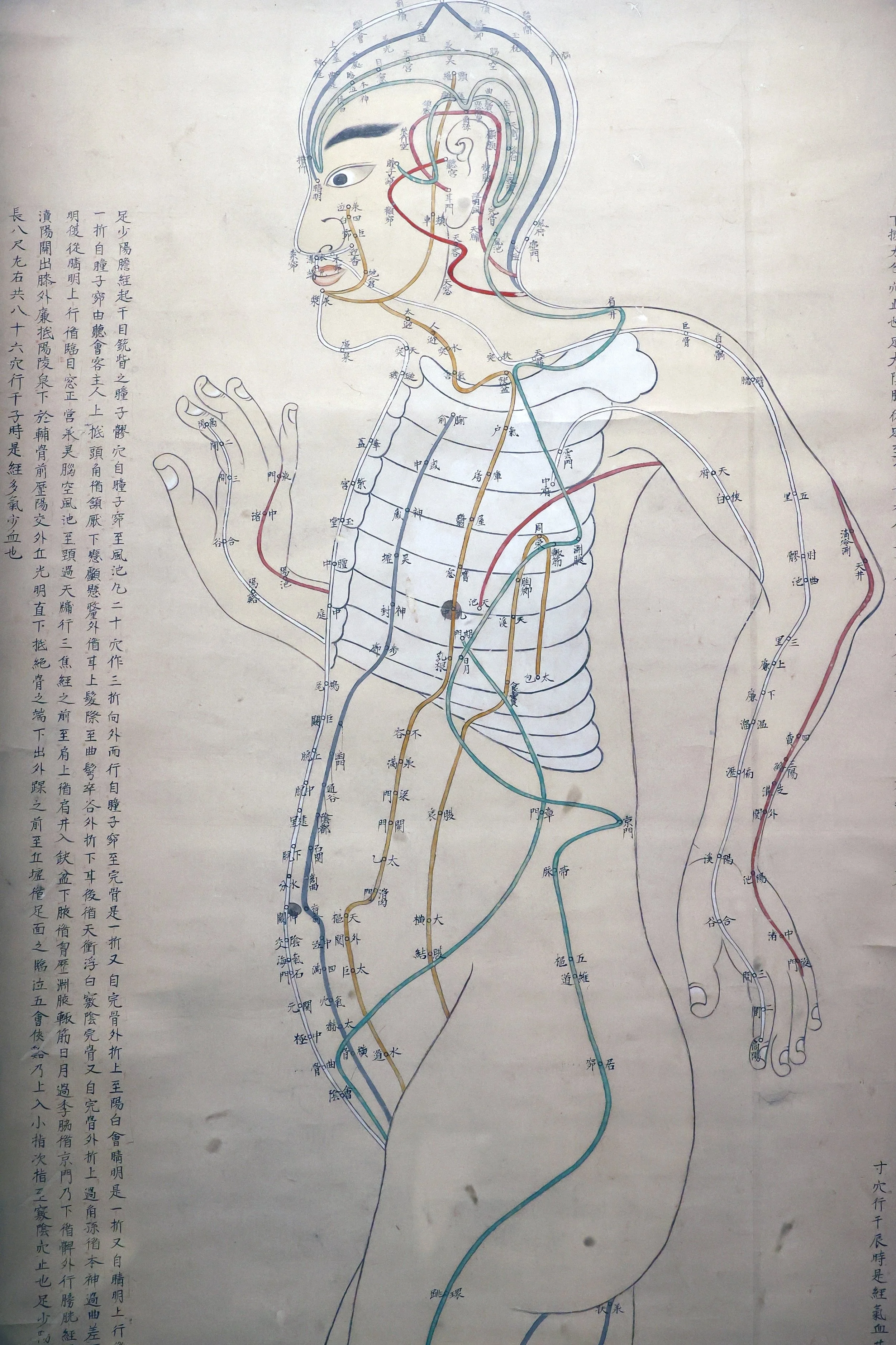
The idea of there being a circulatory system involving the body’s connective tissue was not unfamiliar to some medical systems, including Traditional Chinese Medicine (TCM). Until very recently, Western science had no anatomical structure to map the 12 main acupuncture channels on to. Acupuncture meridians traditionally are believed to constitute channels connecting the surface of the body to internal organs. This knowledge is quite ancient (from a TCM perspective over 3000 years) - it’s something that other systems of medicine have been offering for a long time, but they didn’t have microscopes.
“The identification of the interstitium has given researchers a plausible physical candidate for the very channels that acupuncture has worked with for thousands of years.”
In 2002, Langevin and Yandow mapped the locations of acupuncture points in the arms to the fascia between and around muscles. These acupuncture points have since been found to lie within the same areas of connective tissue where fluid flows through the interstitium. If acupuncture points seem to reside within the interstitium, could the meridians run through the interstitium as well?
A 2019 study by researchers in China, led by Dr Hongyi Li, explained how they injected chemical tracers into acupuncture points into the hands and feet of cadavers and used chest compressions to push fluid through the bodies. Fluorescent photography enabled them to see the tracers travelling towards the heart within the interstitial spaces of the arms and legs. Li at al clearly recognised that they had glimpsed evidence of an interstitial circulation system.
Then in 2021, a group of researchers (Tang et al) conducted a similar experiment - this time in living subjects, injecting dye into acupuncture in the forearms of the 15 volunteers. In almost all of them, the dye slowly migrated upwards along a route corresponding to the Pericardium channel, which passes through the wrist and along the inner arm. The pathway that the dye took goes into the interstitium between the muscles and cannot be attributed to blood vessels or lymphatics.
“I actually do think that the interstitium could be the link between Eastern and Western medicine” Well commented, “But you have to show scientifically that that's the case. Much more research is needed to begin to understand the full implications of the discovery of an interconnected interstitium but these are some promising leads”
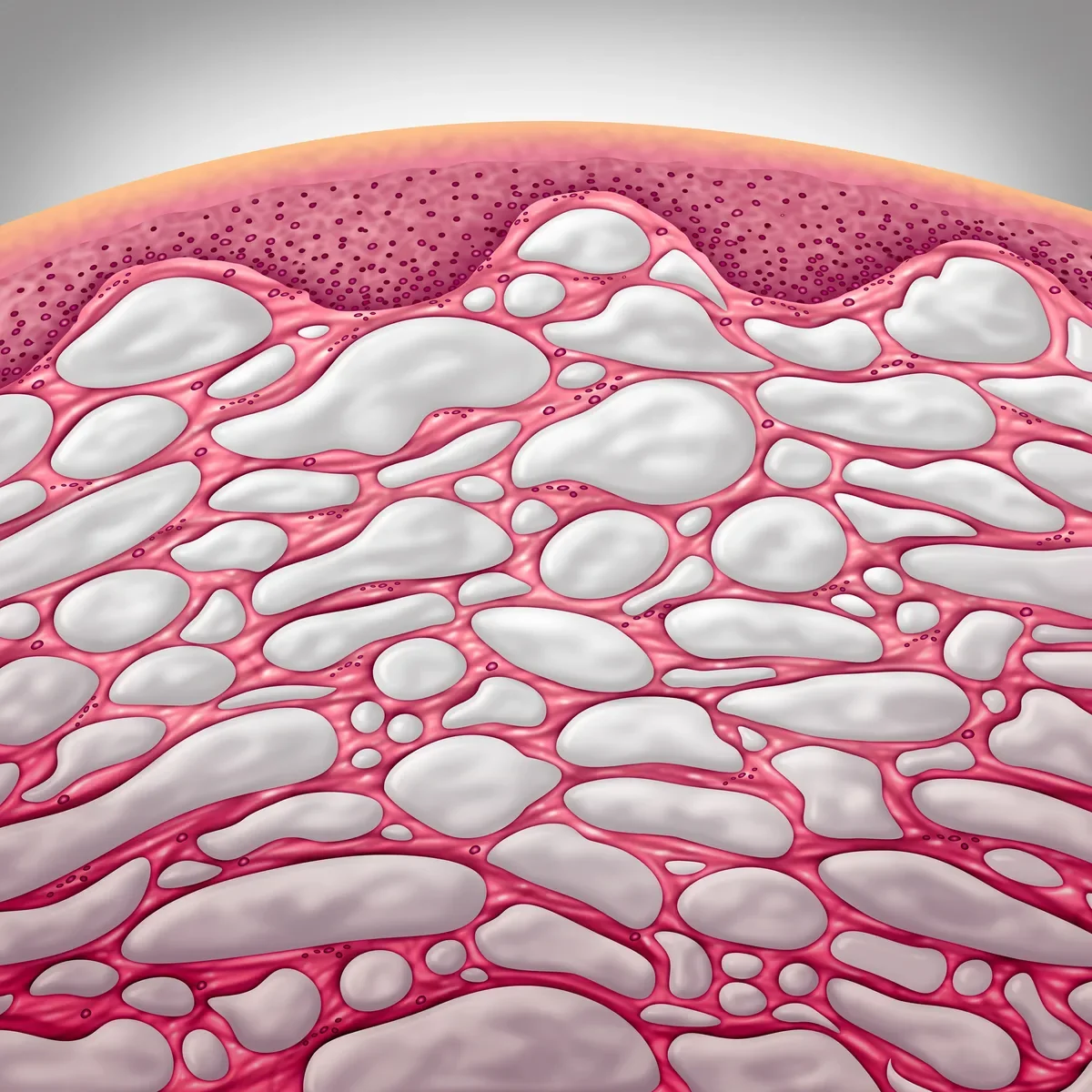
Digital illustration showing the interstitial network beneath the skin’s surface - the fluid filled channels (white) woven between a scaffold of connective tissue that runs through the body
The report also highlighted the connection between the Interstitium and common conditions such as Type 2 Diabetes and Inflammatory Bowel Disease.
Type 2 Diabetes - Research in animals led by David Merrick (Institute for Diabetes, Obesity and Metabolism Smilow Center for Translational Research, University of Pennsylvania) suggests that when a person gains weight, specialised cells in the interstitium around body fat can be called upon to make healthy fat cells, which are a key factor in fending off Type 2 diabetes. Tipping these specialised cells towards the production of more healthy fats could offer a target for potential diabetes therapies.
Inflammatory bowel disease(IBD) - Wells and Theise suggest that interstitial links may help explain why some patients with IBD, particularly ulcerative colitis, develop an autoimmune that affects the bile ducts. It has been theorised that in IBD immune cells, gut bacteria or bacterial fragments that migrate from the intestines to the liver end up reaching the bile ducts through the interstitium.
Cancer - An interconnected interstitium also seems to play a critical role in cancer metastasis. It is well established that cancer cells can spread to other parts of the body by taking over the lymphatic system. BUT, evidence suggests that tumour cells may reach the lymphatic system by first navigating through the fluid flowing through the interstitium, “like fish swimming downstream.” Numerous types of cancer have been seen spreading through the interstitium, breaking down hyaluronic acid as they spread. These include breast, lung, colon, pancreatic and skin cancers, among others, according to Theise. A drug called Narmafotinib, which disrupts how tumour cells invade and move through the interstitium, has shown promise in early clinical trials for treating pancreatic cancer and combined with chemotherapy.
Hydra - Wells points out that hydra - tiny freshwater invertebrates - have fluid filled connective tissue called mesoglea that, like the interstitium, contain collagen and a gel-like substance similar to hyaluronic acid.
Plants - Plants seem to possess their own version of an interstitium too. It's called the apoplast, a type of interstitial space that transports water and nutrients outside cell membranes.
These and other examples suggest that fluid moving through the interstitial spaces might have represented the first circulatory systems to develop in the earliest forms of complex multicellular plant and animal life, hundreds of millions of years ago. This relatively recent discovery may have opened up new research frontiers that connect to some of the most ancient life forms on our planet.
References
Benias PC, Wells RG, Sackey-Aboagye B, Klavan H, Reidy J, Buonocore D, Miranda M, Kornacki S, Wayne M, Carr-Locke DL, Theise ND. Structure and Distribution of an Unrecognized Interstitium in Human Tissues. Sci Rep. 2018 Mar 27;8(1):4947. doi: 10.1038/s41598-018-23062-6. Erratum in: Sci Rep. 2018 May 10;8(1):7610. doi: 10.1038/s41598-018-25732-x. PMID: 29588511; PMCID: PMC5869738.
Cenaj O, Allison DHR, Imam R, Zeck B, Drohan LM, Chiriboga L, Llewellyn J, Liu CZ, Park YN, Wells RG, Theise ND. Evidence for continuity of interstitial spaces across tissue and organ boundaries in humans. Commun Biol. 2021 Mar 31;4(1):436. doi: 10.1038/s42003-021-01962-0. PMID: 33790388; PMCID: PMC8012658
Langevin HM, Yandow JA. Relationship of acupuncture points and meridians to connective tissue planes. Anat Rec. 2002 Dec 15;269(6):257-65. doi: 10.1002/ar.10185. PMID: 12467083.
Li H, Yang C, Yin Y, Wang F, Chen M, Xu L, Wang N, Zhang D, Wang X, Kong Y, Li Q, Su S, Cao Y, Liu W, Ao Z, Dai L, Ma C, Shang L, Han D, Ji F, Li H. An extravascular fluid transport system based on structural framework of fibrous connective tissues in human body. Cell Prolif. 2019 Sep;52(5):e12667. doi: 10.1111/cpr.12667. Epub 2019 Aug 1. PMID: 31373101; PMCID: PMC6797508.
Li T, Tang BQ, Zhang WB, Zhao M, Hu Q, Ahn A. In Vivo Visualization of the Pericardium Meridian with Fluorescent Dyes. Evid Based Complement Alternat Med. 2021 Mar 29;2021:5581227. doi: 10.1155/2021/5581227. PMID: 33854554; PMCID: PMC8021474.